The eminent Dr. Amarsinh D Nikam MD(Hom) is interviewed by Ashok RajGuru
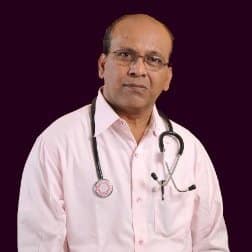
Dr. Amar Sinha Nikam
The Royal London Homeopathic Hospital (RLHH) was founded in 1849 by Dr. Frederick Foster Quin, the first homeopath in England, and a pupil of Dr Samuel Hahnemann. Sadly, a hundred and sixty one years later, in the year 2010 it closed down, or rather lost its unique identity as a “Homeopathic Hospital”. One reason cited for its sad demise was the fact that the last Director, the illustrious Dr. Anthony Campbell, was convinced that Homeopathy was “just another form of counselling” and was skeptical of all the “deluded claims” homeopaths made about the efficacy of Homeopathy [1]. The following interview will convince the reader that shortcomings in leadership and practical skills must have led to the demise of the RLHH, not the weakness of Homeopathy.
In stark contrast to this line of thinking, one Homeopath in India, Dr. Amarsinh D Nikam, had the gumption, or rather the audacity to put on stake all his earnings and reputation to start the first full-fledged private hospital offering only homeopathic treatment. The Aditya Homeopathic Hospital and Healing Centre was established in 1994 in Pune, India. Today it is an 80-bed facility, with a waiting-list of patients seeking admission for treatment. This interviewer wanted to find out what a “homeopathy only” hospital was, and sought to interview the founder, Dr. AD Nikam. Dr. Nikam was gracious enough to grant a two hour slot on a Sunday morning.
What followed was a very spirited discussion that was very illuminating. What made the interview so conversational and interesting was the fact that while both the interviewer and the interviewee are fluent in English, they are also native speakers of the Marathi language (which is their Mother tongue), and both love the poetic Urdu language, in which Dr. Nikam is wont to compose and recite couplets impromptu! Indeed, Dr. Nikam comes across as a man of many parts – doctor, entrepreneur, author, animal lover, teacher, social worker, film producer and most of all a compassionate human being.
AR: Dr. Nikam, I wish to thank you for granting me this interview on behalf of Hpathy.
Dr. ADN: It is my pleasure to welcome you to my Hospital and I shall be happy to answer your questions.
AR: Can you briefly tell us about the concept of a Homeopathic Hospital?
Dr. ADN: Well, you have many hospitals that boast of having Homeopathic consultants on their panel of consultants. These Homeopaths are doing an excellent job in helping patients with many chronic conditions. But they work during fixed hours. Once their clinic hours are over, they “pull their shutters down” and go home. From my early days as a student, I felt, Homeopathy should offer a full-fledged hospital that admits and treats patients by homeopathy alone, on a 24 X 7 X 365 basis, even in cases of emergency – just like any hospital.
AR: You mean to say that your hospital provides treatment to emergency cases as well? Can you give an example?
Dr. ADN: I am sure you understand there can be no greater medical emergency than a cardiac emergency, where every moment counts. Our hospital deals with every type of case, be it acute pericarditis, cardiac myopathy, endocarditis, myocardial infarction, acute renal failure, acute appendicitis – every conceivable condition that would require immediate medical attention and admission to a hospital. Also, we deal with Multiple Sclerosis, trigeminal neuralgia, psoriasis, brain tumors and many such conditions for which a patient may not find much help in a General Hospital or a Specialty Unit. Our hospital has an ambulance so that patients do not lose time reaching us. So far more than 3,000 critical cardiac cases have been successfully treated here. In my book Homeopathic Hospital? Yes! [2], I have presented typical cases that are admitted and treated at the hospital routinely. In all cases we have demonstrated the efficacy of homeopathy not only on the basis of a “feel good” sensation reported by the patient, but also with the support of diagnostic tests and clinical parameters.
AR: That is very interesting, because people never associate homeopathy with emergency care. So, do you mean to say you don’t use any injections, pain killers etc?
Dr. ADN: Absolutely. In our hospital we use no injections, intravenous saline transfusions and other things that people take for granted in a hospital ward. But that does not mean we are primitive. We take advantage of all state-of-the-art diagnostic tools to understand the pathology and progress of disease. We even monitor patients on CCTV to understand symptoms, modalities and peculiarities that may not be evident in a case-taking session.
AR: That is amazing! I would like to know how it all began. Tell us something about your childhood days and how you became a Homeopath.
Dr. ADN: Well, I come from a family of medical practitioners. My grandfather, Dr. Vitthal Nikam was an Ayurvedic physician and my father, Dr. Dattatraya Nikam was a Homeopath. When I was a young lad, I used to play with my friends barefoot, and we would stray into bushes and brambles while playing hide-and-seek. Very often our soles would bleed when thorns would pierce the soles of our feet. One day, a particularly sharp and big thorn pierced my foot and I was in deep pain. My friends carried me to my father’s clinic which was nearby. I was in terrible pain and I asked my father whether it would pain even more when he pulled the thorn out? I pleaded, “Wasn’t there a medicine that could push the thorn out automatically?” He just smiled and gave me some sugary pills and told me to go home. By the time I climbed down the stairs of the clinic, I realized the thorn was gone and so was the pain! That night I decided that I too wanted to be a doctor who would treat patients without pain or harm.


Ashok
Related
Comments

Alan
V.
Schmukler
September 18, 2015
A must read. A marvelous interview with an extraordinary man. I hope this inspires homeopaths to dream even bigger.

Ravi
Madhukar
Add
a
comment
Dr. Amar Sinha Nikam
The Royal London Homeopathic Hospital (RLHH) was founded in 1849 by Dr. Frederick Foster Quin, the first homeopath in England, and a pupil of Dr Samuel Hahnemann. Sadly, a hundred and sixty one years later, in the year 2010 it closed down, or rather lost its unique identity as a “Homeopathic Hospital”. One reason cited for its sad demise was the fact that the last Director, the illustrious Dr. Anthony Campbell, was convinced that Homeopathy was “just another form of counselling” and was skeptical of all the “deluded claims” homeopaths made about the efficacy of Homeopathy [1]. The following interview will convince the reader that shortcomings in leadership and practical skills must have led to the demise of the RLHH, not the weakness of Homeopathy.
In stark contrast to this line of thinking, one Homeopath in India, Dr. Amarsinh D Nikam, had the gumption, or rather the audacity to put on stake all his earnings and reputation to start the first full-fledged private hospital offering only homeopathic treatment. The Aditya Homeopathic Hospital and Healing Centre was established in 1994 in Pune, India. Today it is an 80-bed facility, with a waiting-list of patients seeking admission for treatment. This interviewer wanted to find out what a “homeopathy only” hospital was, and sought to interview the founder, Dr. AD Nikam. Dr. Nikam was gracious enough to grant a two hour slot on a Sunday morning.
What followed was a very spirited discussion that was very illuminating. What made the interview so conversational and interesting was the fact that while both the interviewer and the interviewee are fluent in English, they are also native speakers of the Marathi language (which is their Mother tongue), and both love the poetic Urdu language, in which Dr. Nikam is wont to compose and recite couplets impromptu! Indeed, Dr. Nikam comes across as a man of many parts – doctor, entrepreneur, author, animal lover, teacher, social worker, film producer and most of all a compassionate human being.
AR: Dr. Nikam, I wish to thank you for granting me this interview on behalf of Hpathy.
Dr. ADN: It is my pleasure to welcome you to my Hospital and I shall be happy to answer your questions.
AR: Can you briefly tell us about the concept of a Homeopathic Hospital?
Dr. ADN: Well, you have many hospitals that boast of having Homeopathic consultants on their panel of consultants. These Homeopaths are doing an excellent job in helping patients with many chronic conditions. But they work during fixed hours. Once their clinic hours are over, they “pull their shutters down” and go home. From my early days as a student, I felt, Homeopathy should offer a full-fledged hospital that admits and treats patients by homeopathy alone, on a 24 X 7 X 365 basis, even in cases of emergency – just like any hospital.
AR: You mean to say that your hospital provides treatment to emergency cases as well? Can you give an example?
Dr. ADN: I am sure you understand there can be no greater medical emergency than a cardiac emergency, where every moment counts. Our hospital deals with every type of case, be it acute pericarditis, cardiac myopathy, endocarditis, myocardial infarction, acute renal failure, acute appendicitis – every conceivable condition that would require immediate medical attention and admission to a hospital. Also, we deal with Multiple Sclerosis, trigeminal neuralgia, psoriasis, brain tumors and many such conditions for which a patient may not find much help in a General Hospital or a Specialty Unit. Our hospital has an ambulance so that patients do not lose time reaching us. So far more than 3,000 critical cardiac cases have been successfully treated here. In my book Homeopathic Hospital? Yes! [2], I have presented typical cases that are admitted and treated at the hospital routinely. In all cases we have demonstrated the efficacy of homeopathy not only on the basis of a “feel good” sensation reported by the patient, but also with the support of diagnostic tests and clinical parameters.
AR: That is very interesting, because people never associate homeopathy with emergency care. So, do you mean to say you don’t use any injections, pain killers etc?
Dr. ADN: Absolutely. In our hospital we use no injections, intravenous saline transfusions and other things that people take for granted in a hospital ward. But that does not mean we are primitive. We take advantage of all state-of-the-art diagnostic tools to understand the pathology and progress of disease. We even monitor patients on CCTV to understand symptoms, modalities and peculiarities that may not be evident in a case-taking session.
AR: That is amazing! I would like to know how it all began. Tell us something about your childhood days and how you became a Homeopath.
Dr. ADN: Well, I come from a family of medical practitioners. My grandfather, Dr. Vitthal Nikam was an Ayurvedic physician and my father, Dr. Dattatraya Nikam was a Homeopath. When I was a young lad, I used to play with my friends barefoot, and we would stray into bushes and brambles while playing hide-and-seek. Very often our soles would bleed when thorns would pierce the soles of our feet. One day, a particularly sharp and big thorn pierced my foot and I was in deep pain. My friends carried me to my father’s clinic which was nearby. I was in terrible pain and I asked my father whether it would pain even more when he pulled the thorn out? I pleaded, “Wasn’t there a medicine that could push the thorn out automatically?” He just smiled and gave me some sugary pills and told me to go home. By the time I climbed down the stairs of the clinic, I realized the thorn was gone and so was the pain! That night I decided that I too wanted to be a doctor who would treat patients without pain or harm.
Ashok
Related
Comments
Alan
V.
Schmukler
September 18, 2015
A must read. A marvelous interview with an extraordinary man. I hope this inspires homeopaths to dream even bigger.
Ravi
Madhukar
Add
a
comment
Dr. Amar Sinha Nikam
The Royal London Homeopathic Hospital (RLHH) was founded in 1849 by Dr. Frederick Foster Quin, the first homeopath in England, and a pupil of Dr Samuel Hahnemann. Sadly, a hundred and sixty one years later, in the year 2010 it closed down, or rather lost its unique identity as a “Homeopathic Hospital”. One reason cited for its sad demise was the fact that the last Director, the illustrious Dr. Anthony Campbell, was convinced that Homeopathy was “just another form of counselling” and was skeptical of all the “deluded claims” homeopaths made about the efficacy of Homeopathy [1]. The following interview will convince the reader that shortcomings in leadership and practical skills must have led to the demise of the RLHH, not the weakness of Homeopathy.
In stark contrast to this line of thinking, one Homeopath in India, Dr. Amarsinh D Nikam, had the gumption, or rather the audacity to put on stake all his earnings and reputation to start the first full-fledged private hospital offering only homeopathic treatment. The Aditya Homeopathic Hospital and Healing Centre was established in 1994 in Pune, India. Today it is an 80-bed facility, with a waiting-list of patients seeking admission for treatment. This interviewer wanted to find out what a “homeopathy only” hospital was, and sought to interview the founder, Dr. AD Nikam. Dr. Nikam was gracious enough to grant a two hour slot on a Sunday morning.
What followed was a very spirited discussion that was very illuminating. What made the interview so conversational and interesting was the fact that while both the interviewer and the interviewee are fluent in English, they are also native speakers of the Marathi language (which is their Mother tongue), and both love the poetic Urdu language, in which Dr. Nikam is wont to compose and recite couplets impromptu! Indeed, Dr. Nikam comes across as a man of many parts – doctor, entrepreneur, author, animal lover, teacher, social worker, film producer and most of all a compassionate human being.
AR: Dr. Nikam, I wish to thank you for granting me this interview on behalf of Hpathy.
Dr. ADN: It is my pleasure to welcome you to my Hospital and I shall be happy to answer your questions.
AR: Can you briefly tell us about the concept of a Homeopathic Hospital?
Dr. ADN: Well, you have many hospitals that boast of having Homeopathic consultants on their panel of consultants. These Homeopaths are doing an excellent job in helping patients with many chronic conditions. But they work during fixed hours. Once their clinic hours are over, they “pull their shutters down” and go home. From my early days as a student, I felt, Homeopathy should offer a full-fledged hospital that admits and treats patients by homeopathy alone, on a 24 X 7 X 365 basis, even in cases of emergency – just like any hospital.
AR: You mean to say that your hospital provides treatment to emergency cases as well? Can you give an example?
Dr. ADN: I am sure you understand there can be no greater medical emergency than a cardiac emergency, where every moment counts. Our hospital deals with every type of case, be it acute pericarditis, cardiac myopathy, endocarditis, myocardial infarction, acute renal failure, acute appendicitis – every conceivable condition that would require immediate medical attention and admission to a hospital. Also, we deal with Multiple Sclerosis, trigeminal neuralgia, psoriasis, brain tumors and many such conditions for which a patient may not find much help in a General Hospital or a Specialty Unit. Our hospital has an ambulance so that patients do not lose time reaching us. So far more than 3,000 critical cardiac cases have been successfully treated here. In my book Homeopathic Hospital? Yes! [2], I have presented typical cases that are admitted and treated at the hospital routinely. In all cases we have demonstrated the efficacy of homeopathy not only on the basis of a “feel good” sensation reported by the patient, but also with the support of diagnostic tests and clinical parameters.
AR: That is very interesting, because people never associate homeopathy with emergency care. So, do you mean to say you don’t use any injections, pain killers etc?
Dr. ADN: Absolutely. In our hospital we use no injections, intravenous saline transfusions and other things that people take for granted in a hospital ward. But that does not mean we are primitive. We take advantage of all state-of-the-art diagnostic tools to understand the pathology and progress of disease. We even monitor patients on CCTV to understand symptoms, modalities and peculiarities that may not be evident in a case-taking session.
AR: That is amazing! I would like to know how it all began. Tell us something about your childhood days and how you became a Homeopath.
Dr. ADN: Well, I come from a family of medical practitioners. My grandfather, Dr. Vitthal Nikam was an Ayurvedic physician and my father, Dr. Dattatraya Nikam was a Homeopath. When I was a young lad, I used to play with my friends barefoot, and we would stray into bushes and brambles while playing hide-and-seek. Very often our soles would bleed when thorns would pierce the soles of our feet. One day, a particularly sharp and big thorn pierced my foot and I was in deep pain. My friends carried me to my father’s clinic which was nearby. I was in terrible pain and I asked my father whether it would pain even more when he pulled the thorn out? I pleaded, “Wasn’t there a medicine that could push the thorn out automatically?” He just smiled and gave me some sugary pills and told me to go home. By the time I climbed down the stairs of the clinic, I realized the thorn was gone and so was the pain! That night I decided that I too wanted to be a doctor who would treat patients without pain or harm.
Ashok
Related
Comments
Alan
V.
Schmukler
September 18, 2015
A must read. A marvelous interview with an extraordinary man. I hope this inspires homeopaths to dream even bigger.
Ravi
Madhukar
Add
a
comment
Dr. Amar Sinha Nikam
The Royal London Homeopathic Hospital (RLHH) was founded in 1849 by Dr. Frederick Foster Quin, the first homeopath in England, and a pupil of Dr Samuel Hahnemann. Sadly, a hundred and sixty one years later, in the year 2010 it closed down, or rather lost its unique identity as a “Homeopathic Hospital”. One reason cited for its sad demise was the fact that the last Director, the illustrious Dr. Anthony Campbell, was convinced that Homeopathy was “just another form of counselling” and was skeptical of all the “deluded claims” homeopaths made about the efficacy of Homeopathy [1]. The following interview will convince the reader that shortcomings in leadership and practical skills must have led to the demise of the RLHH, not the weakness of Homeopathy.
In stark contrast to this line of thinking, one Homeopath in India, Dr. Amarsinh D Nikam, had the gumption, or rather the audacity to put on stake all his earnings and reputation to start the first full-fledged private hospital offering only homeopathic treatment. The Aditya Homeopathic Hospital and Healing Centre was established in 1994 in Pune, India. Today it is an 80-bed facility, with a waiting-list of patients seeking admission for treatment. This interviewer wanted to find out what a “homeopathy only” hospital was, and sought to interview the founder, Dr. AD Nikam. Dr. Nikam was gracious enough to grant a two hour slot on a Sunday morning.
What followed was a very spirited discussion that was very illuminating. What made the interview so conversational and interesting was the fact that while both the interviewer and the interviewee are fluent in English, they are also native speakers of the Marathi language (which is their Mother tongue), and both love the poetic Urdu language, in which Dr. Nikam is wont to compose and recite couplets impromptu! Indeed, Dr. Nikam comes across as a man of many parts – doctor, entrepreneur, author, animal lover, teacher, social worker, film producer and most of all a compassionate human being.
AR: Dr. Nikam, I wish to thank you for granting me this interview on behalf of Hpathy.
Dr. ADN: It is my pleasure to welcome you to my Hospital and I shall be happy to answer your questions.
AR: Can you briefly tell us about the concept of a Homeopathic Hospital?
Dr. ADN: Well, you have many hospitals that boast of having Homeopathic consultants on their panel of consultants. These Homeopaths are doing an excellent job in helping patients with many chronic conditions. But they work during fixed hours. Once their clinic hours are over, they “pull their shutters down” and go home. From my early days as a student, I felt, Homeopathy should offer a full-fledged hospital that admits and treats patients by homeopathy alone, on a 24 X 7 X 365 basis, even in cases of emergency – just like any hospital.
AR: You mean to say that your hospital provides treatment to emergency cases as well? Can you give an example?
Dr. ADN: I am sure you understand there can be no greater medical emergency than a cardiac emergency, where every moment counts. Our hospital deals with every type of case, be it acute pericarditis, cardiac myopathy, endocarditis, myocardial infarction, acute renal failure, acute appendicitis – every conceivable condition that would require immediate medical attention and admission to a hospital. Also, we deal with Multiple Sclerosis, trigeminal neuralgia, psoriasis, brain tumors and many such conditions for which a patient may not find much help in a General Hospital or a Specialty Unit. Our hospital has an ambulance so that patients do not lose time reaching us. So far more than 3,000 critical cardiac cases have been successfully treated here. In my book Homeopathic Hospital? Yes! [2], I have presented typical cases that are admitted and treated at the hospital routinely. In all cases we have demonstrated the efficacy of homeopathy not only on the basis of a “feel good” sensation reported by the patient, but also with the support of diagnostic tests and clinical parameters.
AR: That is very interesting, because people never associate homeopathy with emergency care. So, do you mean to say you don’t use any injections, pain killers etc?
Dr. ADN: Absolutely. In our hospital we use no injections, intravenous saline transfusions and other things that people take for granted in a hospital ward. But that does not mean we are primitive. We take advantage of all state-of-the-art diagnostic tools to understand the pathology and progress of disease. We even monitor patients on CCTV to understand symptoms, modalities and peculiarities that may not be evident in a case-taking session.
AR: That is amazing! I would like to know how it all began. Tell us something about your childhood days and how you became a Homeopath.
Dr. ADN: Well, I come from a family of medical practitioners. My grandfather, Dr. Vitthal Nikam was an Ayurvedic physician and my father, Dr. Dattatraya Nikam was a Homeopath. When I was a young lad, I used to play with my friends barefoot, and we would stray into bushes and brambles while playing hide-and-seek. Very often our soles would bleed when thorns would pierce the soles of our feet. One day, a particularly sharp and big thorn pierced my foot and I was in deep pain. My friends carried me to my father’s clinic which was nearby. I was in terrible pain and I asked my father whether it would pain even more when he pulled the thorn out? I pleaded, “Wasn’t there a medicine that could push the thorn out automatically?” He just smiled and gave me some sugary pills and told me to go home. By the time I climbed down the stairs of the clinic, I realized the thorn was gone and so was the pain! That night I decided that I too wanted to be a doctor who would treat patients without pain or harm.
Ashok
Related
Comments
Alan
V.
Schmukler
September 18, 2015
A must read. A marvelous interview with an extraordinary man. I hope this inspires homeopaths to dream even bigger.
Ravi
Madhukar
Add
a
comment
Dr. Amar Sinha Nikam
The Royal London Homeopathic Hospital (RLHH) was founded in 1849 by Dr. Frederick Foster Quin, the first homeopath in England, and a pupil of Dr Samuel Hahnemann. Sadly, a hundred and sixty one years later, in the year 2010 it closed down, or rather lost its unique identity as a “Homeopathic Hospital”. One reason cited for its sad demise was the fact that the last Director, the illustrious Dr. Anthony Campbell, was convinced that Homeopathy was “just another form of counselling” and was skeptical of all the “deluded claims” homeopaths made about the efficacy of Homeopathy [1]. The following interview will convince the reader that shortcomings in leadership and practical skills must have led to the demise of the RLHH, not the weakness of Homeopathy.
In stark contrast to this line of thinking, one Homeopath in India, Dr. Amarsinh D Nikam, had the gumption, or rather the audacity to put on stake all his earnings and reputation to start the first full-fledged private hospital offering only homeopathic treatment. The Aditya Homeopathic Hospital and Healing Centre was established in 1994 in Pune, India. Today it is an 80-bed facility, with a waiting-list of patients seeking admission for treatment. This interviewer wanted to find out what a “homeopathy only” hospital was, and sought to interview the founder, Dr. AD Nikam. Dr. Nikam was gracious enough to grant a two hour slot on a Sunday morning.
What followed was a very spirited discussion that was very illuminating. What made the interview so conversational and interesting was the fact that while both the interviewer and the interviewee are fluent in English, they are also native speakers of the Marathi language (which is their Mother tongue), and both love the poetic Urdu language, in which Dr. Nikam is wont to compose and recite couplets impromptu! Indeed, Dr. Nikam comes across as a man of many parts – doctor, entrepreneur, author, animal lover, teacher, social worker, film producer and most of all a compassionate human being.
AR: Dr. Nikam, I wish to thank you for granting me this interview on behalf of Hpathy.
Dr. ADN: It is my pleasure to welcome you to my Hospital and I shall be happy to answer your questions.
AR: Can you briefly tell us about the concept of a Homeopathic Hospital?
Dr. ADN: Well, you have many hospitals that boast of having Homeopathic consultants on their panel of consultants. These Homeopaths are doing an excellent job in helping patients with many chronic conditions. But they work during fixed hours. Once their clinic hours are over, they “pull their shutters down” and go home. From my early days as a student, I felt, Homeopathy should offer a full-fledged hospital that admits and treats patients by homeopathy alone, on a 24 X 7 X 365 basis, even in cases of emergency – just like any hospital.
AR: You mean to say that your hospital provides treatment to emergency cases as well? Can you give an example?
Dr. ADN: I am sure you understand there can be no greater medical emergency than a cardiac emergency, where every moment counts. Our hospital deals with every type of case, be it acute pericarditis, cardiac myopathy, endocarditis, myocardial infarction, acute renal failure, acute appendicitis – every conceivable condition that would require immediate medical attention and admission to a hospital. Also, we deal with Multiple Sclerosis, trigeminal neuralgia, psoriasis, brain tumors and many such conditions for which a patient may not find much help in a General Hospital or a Specialty Unit. Our hospital has an ambulance so that patients do not lose time reaching us. So far more than 3,000 critical cardiac cases have been successfully treated here. In my book Homeopathic Hospital? Yes! [2], I have presented typical cases that are admitted and treated at the hospital routinely. In all cases we have demonstrated the efficacy of homeopathy not only on the basis of a “feel good” sensation reported by the patient, but also with the support of diagnostic tests and clinical parameters.
AR: That is very interesting, because people never associate homeopathy with emergency care. So, do you mean to say you don’t use any injections, pain killers etc?
Dr. ADN: Absolutely. In our hospital we use no injections, intravenous saline transfusions and other things that people take for granted in a hospital ward. But that does not mean we are primitive. We take advantage of all state-of-the-art diagnostic tools to understand the pathology and progress of disease. We even monitor patients on CCTV to understand symptoms, modalities and peculiarities that may not be evident in a case-taking session.
AR: That is amazing! I would like to know how it all began. Tell us something about your childhood days and how you became a Homeopath.
Dr. ADN: Well, I come from a family of medical practitioners. My grandfather, Dr. Vitthal Nikam was an Ayurvedic physician and my father, Dr. Dattatraya Nikam was a Homeopath. When I was a young lad, I used to play with my friends barefoot, and we would stray into bushes and brambles while playing hide-and-seek. Very often our soles would bleed when thorns would pierce the soles of our feet. One day, a particularly sharp and big thorn pierced my foot and I was in deep pain. My friends carried me to my father’s clinic which was nearby. I was in terrible pain and I asked my father whether it would pain even more when he pulled the thorn out? I pleaded, “Wasn’t there a medicine that could push the thorn out automatically?” He just smiled and gave me some sugary pills and told me to go home. By the time I climbed down the stairs of the clinic, I realized the thorn was gone and so was the pain! That night I decided that I too wanted to be a doctor who would treat patients without pain or harm.
Ashok
Related
Comments
Alan
V.
Schmukler
September 18, 2015
A must read. A marvelous interview with an extraordinary man. I hope this inspires homeopaths to dream even bigger.

